

Yes, English-speaking doctors in Tbilisi are available, but English may be spoken by some clinic staff rather than every provider. The U.S. Embassy in Tbilisi publishes a list of physicians and clinics able to treat English-speaking patients in Georgia, while the UK Foreign Office says its medical-facilities list covers providers where some staff speak English.
Before booking, check that the doctor can discuss your specific concern in English, especially if you need to describe symptoms or understand treatment instructions. A clinic listing can help you identify options, but it may not specify which languages each doctor speaks or how comfortably they use them in a medical consultation.
This guide explains what these listings tell you, how to check language support before an appointment, and what to consider when choosing a clinic. It also offers practical advice for preparing for care in Tbilisi, so you can plan with a clearer understanding of the communication available.
Key Takeaways
- Learn how clinic listings can help you identify care options in Tbilisi and what their language descriptions do, and don’t, tell you.
- Use a focused pre-booking check to assess whether a doctor can discuss your symptoms and explain care in English.
- Find out how to interpret language information for listed providers and what to clarify for your appointment.
- Understand how travel medical insurance can support your planning for healthcare during a stay in Georgia.
Do your doctors speak English?
English-speaking doctors in Tbilisi are available, but clinic listings describe language access in different ways. The U.S. Embassy in Tbilisi publishes a list of physicians and clinics able to treat English-speaking patients in Georgia. The UK Foreign Office says its medical-facilities list covers providers where some staff speak English.
A listing can identify a clinic, but the treating doctor’s language ability may differ from that of other staff. For dental care, confirm that the doctor can discuss diagnosis, consent, and aftercare instructions in English. Before booking, note the doctor’s name, clinic, specialty, and stated language. If Russian is easier for you, mention that preference when arranging care.
Consultation fees vary by clinic and specialty, and may depend on the visit format or tests. Compare what the consultation includes, not just language support. Specialties vary by provider, so start with the service you need, such as dentistry for tooth pain, then find a doctor who can explain your care in English.
Walk-in availability and appointment booking depend on the clinic’s schedule. For routine care, contact the clinic with your specialty, preferred language, symptoms, and available times. Request an appointment with the named doctor so you can discuss your needs directly.
Direct billing depends on the arrangement between the clinic and insurer. AMC says patients without direct billing through a local insurer can pay by cash or credit card and claim reimbursement afterward. This describes one payment route, not acceptance of every international policy.
For emergencies in Georgia, call 112. State your location and immediate medical need clearly. Bring medication names, current prescriptions, and relevant medical records to the clinic to explain existing treatment. Some Aversi and PSP pharmacy locations in Tbilisi are open 24 hours, which can help when arranging pharmacy access after a visit.
Patients at private clinics in Georgia can refer themselves to specialists without first obtaining a GP referral. Ask whether the clinic accepts direct specialist appointments for your concern. This can help if you already know which specialty you need, although the provider determines the appropriate assessment and next steps.
American Hospital Tbilisi has 183 beds and a total area of 25000 sqm. When comparing care options, confirm that the hospital offers the specialty and language support you need, and check appointment availability directly with the provider.
Checking a doctor's English proficiency before booking
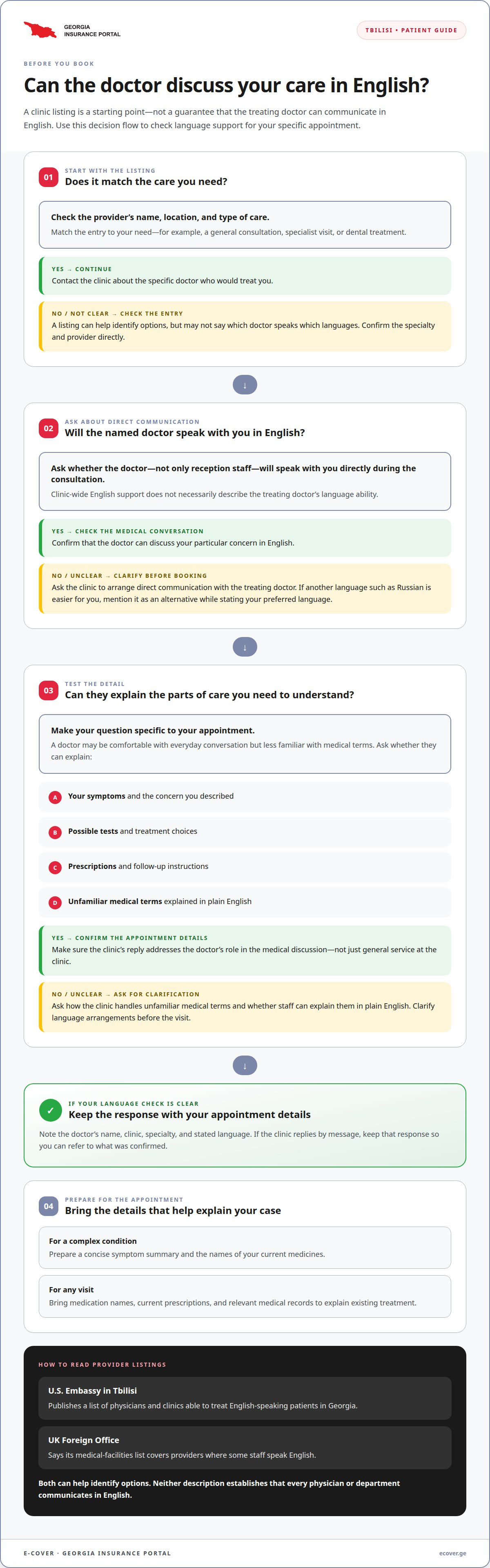
Use a brief language check before confirming an appointment. A clinic’s general English support doesn’t necessarily indicate how clearly your doctor can discuss symptoms, explain options, or answer follow-up questions. Ask whether the specific doctor will speak with you directly in English, rather than relying only on reception staff. Clear communication matters throughout the visit, from describing your concern to understanding what happens next.
Make your request specific. Tell the clinic what kind of appointment you need, then ask about language support for that specialty. A doctor may be comfortable with everyday conversation but less familiar with medical terms. Ask whether they can explain your symptoms, possible tests, treatment choices, and written instructions in English. These examples reveal more than a general “English-speaking” label.
Use this booking checklist:
- Ask whether the named doctor, not only clinic staff, speaks English during consultations.
- Describe your concern briefly, such as recurring headaches or a dental problem, and ask whether the doctor can discuss it in English.
- Ask how the clinic handles unfamiliar national medical terms, including whether staff can explain them in plain English.
- Confirm that you can ask questions and receive explanations about prescriptions or follow-up instructions in English.
If the clinic replies by message, keep its response with your appointment details. Check whether it addresses the doctor’s role in the medical discussion, not just general service at the clinic. If you share another language, such as Russian, mention it as an alternative while clearly stating your preferred language.
For a complex condition, prepare a concise symptom summary and the names of your current medicines. Ask the clinic to arrange direct communication with the treating doctor before your visit. Clear arrangements leave more appointment time for medical concerns, rather than resolving basic language expectations.
English-speaking doctors
For international patients, an English-language listing is a useful starting point, not a complete description of every consultation. The U.S. Embassy in Tbilisi publishes a list of physicians and clinics able to treat English-speaking patients in Georgia. The UK Foreign Office says its medical-facilities list covers providers where some staff speak English. These descriptions identify possible access points, but don’t establish that every physician or department communicates in English.
Check each entry for the provider’s name, location, and type of care. Then match the listing to your need, such as a general consultation, specialist visit, or dental treatment. A clinic’s front desk may speak English while the physician uses another language, so distinguish reception support from direct communication with the doctor.
Before choosing a provider, consider what you need to explain during the appointment. A brief visit for a familiar issue may call for different communication from a consultation about ongoing symptoms, medication, or a proposed procedure. Prepare relevant details, including when symptoms began and which medicines you take. This gives the physician a clear basis for discussing your case.
- Use the U.S. Embassy listing to identify physicians and clinics for English-speaking patients.
- Check that the entry fits the care you need, including dental or specialist services.
- Confirm that English applies to the physician’s consultation, not only general clinic support.
- Prepare symptom and medication details to support a focused discussion.
For a scheduled appointment, keep the provider’s name and clinic details with your booking information. If the listed language support comes from clinic staff, clarify who will explain examination findings and treatment instructions. This helps you understand what communication to expect during the visit.
These listings can help visitors identify English-language care options across Tbilisi, but language access varies by provider and interaction. Use a directory to find a suitable physician, then match the doctor’s role and communication support to the purpose of your appointment.
Languages spoken by listed providers
A provider’s language information helps you plan how to communicate during care. The UK Foreign Office says its medical-facilities list for Georgia covers providers where some staff speak English. That wording matters: it refers to some staff, not necessarily every physician, department, or appointment. A listing therefore suggests possible English support, rather than providing a complete language profile for each clinician.
Apply the same distinction to other languages. Don’t assume a clinic offers Russian or another language because one employee speaks it. Identify the language you need, then ask whether the treating physician can use it during the consultation and when explaining the examination and written instructions. For example, reception may handle scheduling in English while the physician conducts the medical discussion in another language.
Use these steps to interpret a provider listing:
- Separate the languages attributed to clinic staff from those attributed to the physician.
- Check whether language information applies to your specialty or department.
- Tell the clinic your preferred language and ask who will communicate with you.
- For emergency centers, state your language needs clearly alongside the immediate medical concern.
Your language needs can change during a visit. You may manage check-in in English but need clearer support when discussing symptoms, consent, or follow-up instructions. Specify where communication matters most. For instance, ask whether the doctor can explain a treatment plan in English, rather than only asking whether the clinic has English-speaking staff.
Record the clinic’s response with your appointment details. If several languages work for you, list your preferred option first and alternatives afterward. This gives staff a clear basis for arranging communication and helps avoid confusion between conversational support and medical explanation. For broader trip preparation alongside language planning, explore travel medical insurance for Georgia.
E-COVER
E-COVER helps visitors prepare for healthcare in Georgia with travel insurance policies, while you arrange care with a suitable doctor. Starting January 2026, the Georgian government requires all international travelers to have mandatory health insurance. E-COVER provides comprehensive coverage for foreign visitors to meet the legal entry requirements.
Choose coverage that suits your travel circumstances, whether you’re visiting, studying, staying long term, or working as a digital nomad. Insurance planning is separate from confirming a doctor’s language support, so consider both as you prepare for an appointment.
Contact E-COVER to discuss insurance for your stay in Georgia.
Prepare for care before your stay
Finding English speaking doctors in Tbilisi is one part of preparing for healthcare abroad. Keep your appointment details and relevant medical information accessible, and plan separately for healthcare expenses during your stay. This preparation can help you focus on the medical conversation when you need care.
E-COVER offers Travel Insurance Policies, Student Insurance, and long-term travel insurance policies for different travel circumstances. If you’d like help considering insurance for your plans in Georgia, contact E-COVER for help. With your care arrangements and travel preparations in view, you can move forward with greater clarity and confidence.
Frequently Asked Questions
Which doctors and clinics in Tbilisi offer consultations in English?
The U.S. The UK Foreign Office says its medical-facilities list covers providers where some staff speak English. Use these directories to identify options, then match the listed specialty to your needs, such as dental care or a specialist consultation. Language support may differ between staff and the treating doctor.
What are the addresses, phone numbers, and websites of English-speaking clinics in Tbilisi?
Use the U.S. Embassy in Tbilisi’s physician and clinic list to find provider contact details, then confirm the clinic’s current contact information before travelling. Addresses and phone numbers can change, so check the clinic name and branch carefully. The UK Foreign Office’s medical-facilities list is another directory, but its description indicates that some staff speak English, not necessarily every doctor.
How can patients verify a doctor's qualifications and language proficiency in Georgia?
Ask the clinic for the physician’s full name, specialty, and qualifications relevant to your appointment. To check language support, ask whether that doctor can explain your symptoms, treatment options, and follow-up instructions in English. A short conversation about a specific example, such as explaining medication directions, can give you a practical sense of communication. Keep the clinic’s answers with your appointment details.


