

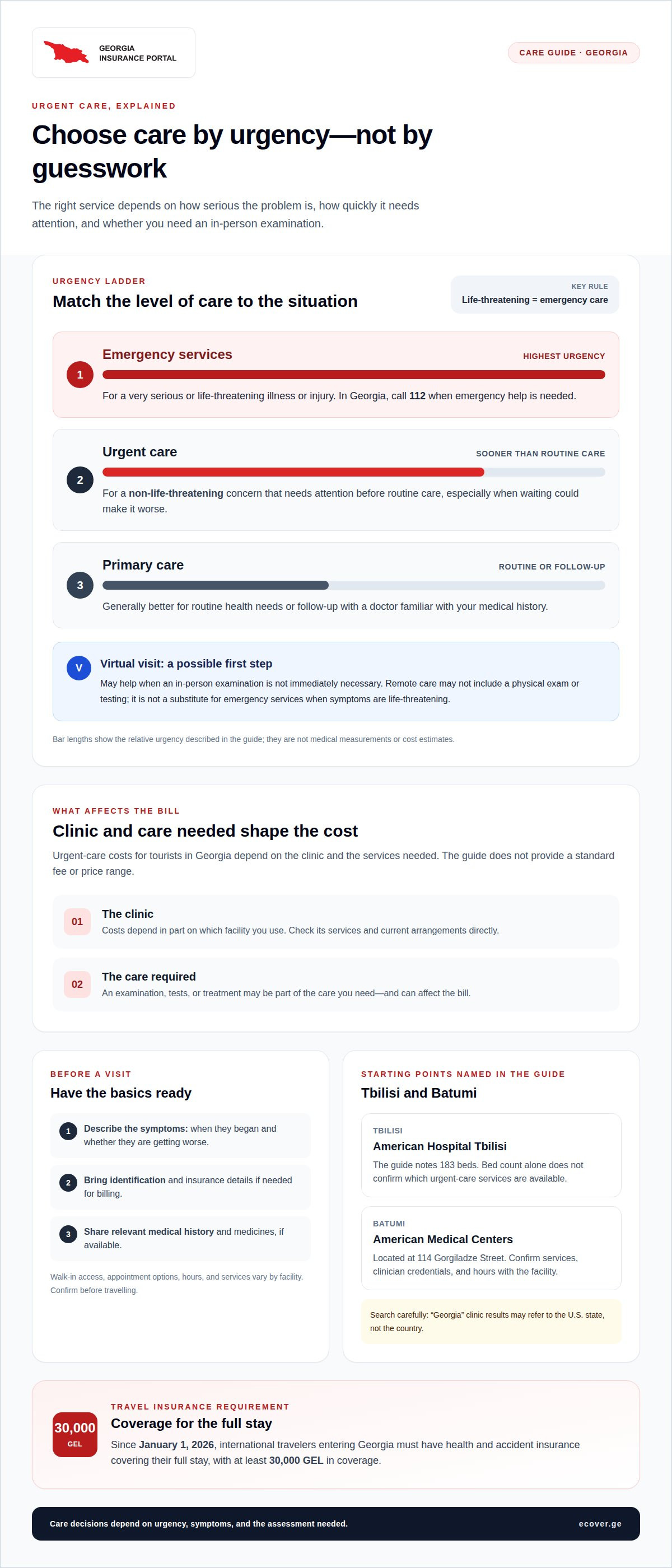
The cost of urgent care for tourists in Georgia depends on the clinic and the care needed, such as an examination, tests or treatment. Since January 1, 2026, international travelers entering Georgia must have health and accident insurance for their full stay, with at least 30,000 GEL in coverage.
An unexpected illness can make it hard to decide where to seek care and what costs to expect, especially in an unfamiliar health system. The right option depends on how serious the problem is: urgent care may suit a non-life-threatening concern, while a life-threatening emergency requires emergency services.
This guide explains what can affect clinic costs, how to find care in Georgia, and what to expect when arranging an appointment or walk-in visit. It also covers when urgent care may not be suitable and how travel insurance can help you prepare for medical expenses during your stay.
Key Takeaways
- Use the clinic options in Tbilisi and Batumi to plan where to seek non-emergency care during your stay.
- Choose urgent, primary, virtual or emergency care based on how serious your symptoms are and how quickly they need attention.
- Understand which factors can affect a clinic bill, and what information to have ready when arranging a visit.
- Learn which common health concerns may be suitable for urgent care and when a different service is more appropriate.
Hospitals and clinics in Tbilisi and Batumi
In Tbilisi, American Hospital Tbilisi is one hospital visitors can consider for medical care. It has 183 beds, but that figure alone doesn’t identify which urgent-care services are available. In Batumi, American Medical Centers is located at 114 Gorgiladze Street. These named facilities give travelers practical starting points in Georgia’s two major cities. Before choosing, match the location to your symptoms and the kind of assessment you need.
A facility’s size or address does not establish its accreditation, and a hospital’s name does not confirm an individual doctor’s qualifications. For American Hospital Tbilisi or American Medical Centers Batumi, review the facility’s published accreditation information and the treating doctor’s professional credentials. Check the clinician’s role and specialty to see whether they match your concern.
Take care with search results for “Georgia” and the AFC clinic network. AFC listings in Georgia may refer to the U.S. state, not the country, so they do not establish a location in Tbilisi or Batumi. Include the country name when searching for a clinic, then confirm the facility’s address and services before travelling. Walk-in access varies, so don’t assume every location accepts patients without an appointment.
Clinic hours and holiday availability depend on the individual facility. Check the named clinic’s current schedule, especially if you’re travelling on a public holiday or outside regular daytime hours. For a time-sensitive concern, contact the facility to confirm its opening arrangements and whether it can assess your symptoms. This helps distinguish a nearby clinic from one that can provide the care you need, without relying on patient volumes or schedules for AFC locations in the United States.
Choosing between urgent, primary, virtual, and emergency care
Urgent care may be suitable for a non-life-threatening problem that needs attention before routine care. Primary care is generally better for routine health needs or follow-up with a doctor familiar with your medical history. A virtual visit may provide a first step when an in-person examination is not immediately necessary. Consider symptom severity, how quickly you need care, and whether a physical examination is needed.
Use a hospital emergency room for a very serious or life-threatening illness or injury. In Georgia, call 112 for emergency services when urgent help is needed. Don’t treat urgent care centers as a substitute for emergency care when a condition is life-threatening. If you’re unsure which service fits, describe the symptoms clearly when contacting a care provider, including when they began and whether they’re getting worse.
Emergency instructions differ by country. In the United States, people who believe they have a medical emergency should call 911 or go to the nearest hospital. That number applies to the United States, not Georgia the country, where the emergency number is 112. This distinction matters while traveling internationally: use the local emergency service for your location rather than relying on a number from home.
Urgent care is intended for non-life-threatening problems that need attention sooner than routine primary care. It can be a convenient option when waiting could make a health concern worse, while a hospital emergency room is the appropriate route for life-threatening cases. Virtual care may help with an initial discussion, but it can’t provide an in-person examination. Consider the type of assessment needed, location, and urgency before choosing among care services. As you prepare for potential medical expenses during a trip, review travel insurance policies alongside your care options.
Walk-in, online booking, and virtual visit options
Some AFC centers in the U.S. state of Georgia accept walk-ins, but that information does not apply to the country of Georgia. For an in-person visit, bring photo identification, insurance details if needed for billing, and any relevant medical history. These help the care team identify you and understand relevant conditions or medications. If the clinic offers online appointments, follow its booking process; options vary by facility.
A virtual visit may be useful when an in-person examination is not immediately necessary. If the facility offers video visits, follow its appointment instructions and be ready to describe your symptoms and medical history. Remote care may not include a physical examination or testing. For life-threatening symptoms, use emergency services rather than waiting for a video appointment.
Tybee Island is in the United States, not the country of Georgia. The Wilmington Island clinic is seven miles from the Tybee Island shoreline. That distance may help visitors estimate the facility’s location, but it does not confirm its services or hours. AFC advises patients to contact each center about the urgent care services it provides. General walk-in information does not establish holiday or video visit hours.
Before an in-person visit, note when your symptoms began, what has changed, and any relevant medical history. Bring identification, insurance details, and a list of medicines if available. The care team can assess your concern and decide whether testing or another facility is appropriate. Walk-in access at participating AFC centers means you may not need to book ahead, but services vary by location. For a video visit, prepare your device and find a private place to explain your symptoms. A life-threatening condition requires hospital or emergency services.
Conditions treated at urgent care
Urgent care is for non-life-threatening problems that need attention sooner than routine care. Symptom severity, how quickly symptoms are changing, and the assessment needed all help determine the right service.
Illnesses Treated
A sore throat, cough, or stomach discomfort are examples of concerns to discuss with a care provider. Explain when symptoms began, how they have changed, and whether they affect eating, drinking, or normal activities. This information helps the provider assess your condition and decide whether urgent care, primary care, or another service is appropriate.
Sunburn and heat rash can also occur while travelling. Describe the affected area, how it feels, and whether symptoms are getting worse. A clinic’s name alone does not confirm that it provides a particular treatment. The facility’s services and the care provider’s assessment determine the next step. Severe or life-threatening symptoms require emergency care, not a routine clinic visit.
Injuries Treated
Minor injuries, such as a small cut or twisted ankle, are examples of concerns you can describe to an urgent care provider. Explain how the injury happened, which area is affected, and whether movement has changed. The clinician can use these details to assess the problem and determine an appropriate care setting. Injuries requiring emergency attention should be taken to emergency services.
For a cut, describe its location and whether it is still bleeding. For an ankle injury, mention swelling, pain, and difficulty walking. These details explain the concern but do not confirm what treatment a particular clinic provides. Services and testing vary by facility and depend on the assessment. For a life-threatening problem, seek emergency care instead of waiting for a clinic appointment.
Before a visit, write down symptoms, relevant medical history, and any medicines you take. Clear details help care providers assess an illness or injury and direct you to the appropriate service. To prepare for unexpected medical needs during your stay, explore travel insurance options for visitors to Georgia.
E-COVER
E-COVER helps visitors prepare for medical expenses in Georgia through travel insurance policies designed for foreign travelers. Its online policies address the country’s health insurance entry requirements, while urgent care remains a separate medical service. Insurance doesn’t replace a clinic, doctor, or emergency service when you need treatment.
Choose coverage that suits your travel plans. E-COVER offers travel insurance policies, student insurance, long-term travel insurance policies, and digital nomad insurance. Arrange coverage before a medical need arises, rather than deciding how to pay only after seeking care.
If you’re planning a visit or need coverage for a longer stay, contact E-COVER to discuss your insurance needs.
Prepare for care before your next trip
Planning for urgent care for tourists in Georgia is easier when you prepare for both medical decisions and insurance before travelling. Keep your policy details accessible, along with a brief medical history and a list of regular medicines. If you need care, this preparation can help you explain your situation and focus on the next step instead of searching for documents.
Clinic charges depend on the assessment and treatment provided, so a single estimate may not reflect every visit. Review your insurance arrangements with your travel plans in mind, including whether you’re visiting temporarily or staying longer. E-COVER can help you consider insurance options for your circumstances. Contact E-COVER for travel support to discuss your needs and plan ahead.
With your documents prepared and a clear plan for seeking care, you can approach your time in Georgia with greater confidence.
Frequently Asked Questions
What costs should I expect?
For urgent care for tourists in Georgia, costs depend on the clinic and the services provided. An examination, diagnostic testing, medication, or additional treatment may affect the bill. What you pay also depends on your insurance benefits and how the clinic processes your claim. Keep receipts and visit documents together in case you need them for an insurance claim.
Where can tourists find urgent care clinics in Georgia, USA?
In the U.S. state of Georgia, urgent care clinics operate in communities across the state. Search using the city or area where you’re staying, and distinguish walk-in clinics from hospital emergency departments in the results. They handle different levels of care. Since this article also covers the country of Georgia, include “USA” in your search when you mean the American state.
What are the urgent care hours and walk-in policies in Georgia?
Hours and walk-in arrangements vary by clinic. Some centers accept patients without an appointment; others schedule visits or offer both options. A walk-in policy does not mean a clinic is always open or can see every patient immediately. Check the facility’s posted schedule, and use emergency services for a life-threatening condition rather than waiting for routine clinic access.
How much does an urgent care visit cost in Georgia without insurance?
Without insurance, your costs depend on the clinic and the care you need. The initial assessment may not be the only charge: testing, supplies, medication, or treatment can affect the total. The main cost factors are the services provided and the clinic’s billing practices. Ask for an itemized bill after your visit to see the separate charges and understand what it included.
Do Georgia urgent care clinics accept out-of-state or travel insurance?
Insurance acceptance and billing depend on the clinic’s arrangements and your policy terms. A clinic may handle different insurance plans differently, and an insurance card alone does not mean direct billing is available. Keep your policy details and insurer contact information with you. Before non-emergency care, understand whether you’ll pay the clinic directly or submit documents for reimbursement under your plan.
What ID or documents should tourists bring to urgent care in Georgia?
For urgent care for tourists in Georgia, bring photo identification, your insurance card if you have one, and any available medical history. A list of medicines, allergy details, and relevant records can help the care team understand your situation. Note when symptoms began and any treatment you have already tried. Keep documents accessible on your phone or with your travel papers, and share relevant information at your visit.


