

A settlement offer may seem like a quick way to move on, but accepting it can limit your ability to seek additional compensation later. If you’re wondering what happens if you get injured in Georgia, prioritize medical care, report a workplace injury to your employer, and keep records of treatment, time missed from work, and claim communications. These steps help document the injury and its effects.
A lawyer from your home state may help you assess your options, but whether they can represent you in a Georgia claim depends on the rules that apply. Don’t assume an early offer is fair or final. Consider how it accounts for medical costs, lost wages, and the injury’s effect on your ability to work.
This guide explains what to do if a claim is denied, how lost-wage benefits and returning to work may be handled, and what to consider before accepting a settlement. It also covers when an out-of-state lawyer may be able to help, so you can approach your next step with a clearer understanding of the process.
Key Takeaways
- If a workers’ compensation claim is denied, learn how to request a hearing and what steps may keep your options open.
- See how medical restrictions and pre-injury wages can affect lost-wage benefits and the return-to-work process.
- Before accepting a settlement, consider whether it accounts for ongoing medical needs and the full impact of the injury.
- Understand what may affect an out-of-state lawyer’s ability to represent you in a Georgia injury case.
Claim denials and appeals
- If you’re asking what happens if you get injured in Georgia, first identify whether the injury occurred at work or in another setting. After a car accident, seek medical attention and record the crash details. The workplace reporting deadline does not apply to car crashes: Georgia State Board of Workers’ Compensation says workers generally must report an on-the-job injury to their employer within 30 days.
- For a serious injury, call 911 or go to an emergency department immediately. A worker needing emergency care after a workplace injury may initially seek treatment from any licensed doctor. For ongoing workers’ compensation treatment, use an authorized physician. Starting January 2026, Georgia requires international travelers to have health insurance; workers’ compensation may cover eligible treatment for work injuries.
- If a workers’ compensation claim is denied or you dispute approved benefits, request a hearing from the State Board of Workers’ Compensation. The Board facilitates the process, while the employer’s insurer pays workers’ compensation claims. Keep the denial notice, medical records, employer communications, and wage documents together. The Board states that workers’ compensation claims have a one-year statute of limitations.
- Understanding what happens if you get injured in Georgia also means considering whether someone other than your employer contributed to a workplace injury. Workers’ compensation generally prevents an employee from suing their employer over a covered work accident, but a third party may be subject to a separate personal injury claim. For example, a worker may have a claim against an equipment manufacturer if defective materials caused the injury.
- In a Georgia personal injury claim, shared responsibility can reduce compensation under the state’s modified comparative negligence rule. Preserve evidence of how the accident happened, including photos, witness details, and medical records. For disputed workers’ compensation benefits, request a Board hearing. A possible third-party claim is a separate route to assess. Keep records organized for each claim.
Lost-wage benefits
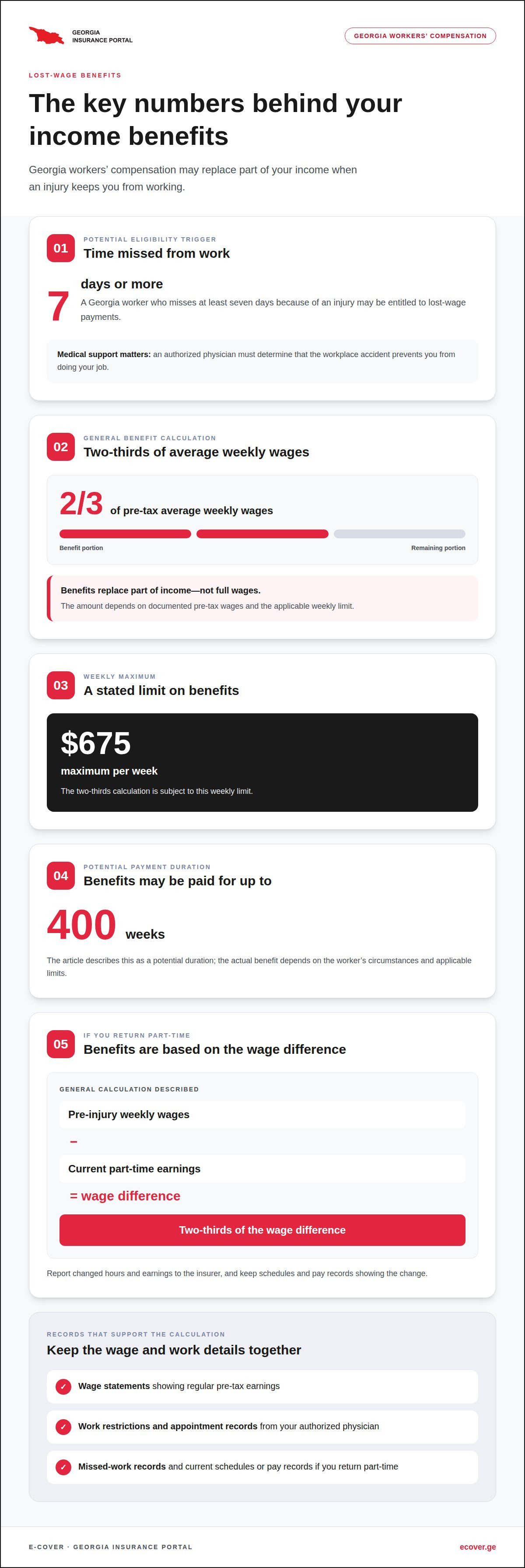
- Ask your authorized physician to document whether the workplace accident prevents you from doing your job. Georgia workers may qualify for income benefits if a physician determines they cannot return to work. Keep copies of work restrictions, appointment records, and wage statements. These documents connect your recovery period to time missed and help explain the basis of your benefits claim.
- Track missed work carefully. A Georgia worker who misses at least seven days because of an injury may be entitled to lost-wage payments through workers’ compensation. Benefits are based on pre-tax average weekly wages, not take-home pay. Save pay statements and records of regular earnings so the insurer can assess the correct wage figure.
- Understand the general calculation before planning household expenses. The stated benefit is two-thirds of the worker’s average weekly wages, subject to a weekly limit of $675, and may be paid for up to 400 weeks. The actual amount depends on the worker’s documented pre-tax wages and the applicable limit. These payments replace part of income; they do not equal full wages.
- If a doctor clears you for part-time work, report your changed schedule and earnings to the workers’ compensation insurer. Benefits for an employee who returns part-time are calculated as two-thirds of the difference in wages. Compare documented pre-injury weekly pay with current part-time earnings, and keep schedules and pay records to show the change.
- Ask how your medical restrictions affect temporary or ongoing disability benefits. Temporary benefits address a period when the injury prevents you from working; longer-term disability may involve lasting limits on earning capacity. The available facts do not establish a separate payment formula for permanent disability, so do not assume it automatically extends temporary benefits. A compensation lawyer can review disputed wage calculations, evidence of work capacity, and claim records. If the insurer’s calculation omits missed hours or earnings, gather those records before challenging it.
Returning to work after an injury
- Keep a dated record of every day missed, medical appointment, and work restriction. Georgia workers can use this timeline to explain how the injury affected attendance and duties. Save messages with the employer and insurance company, along with doctors’ instructions and records of medical care. If symptoms change, note when they changed and how they affected specific work tasks.
- Use your physician’s instructions to guide your return to work. In Georgia, an injured worker must return when their physician determines they are able, even if the injury requires a different job, to remain eligible for benefits. Ask the treating doctor to describe any limits clearly, including tasks the injury prevents, so your employer understands the restrictions.
- If you can manage only part-time hours or modified duties, document your schedule and the work you actually perform. Give your employer and the insurance company your current medical restrictions, and keep copies of updated instructions. For example, if a doctor limits lifting, note whether assigned tasks fit that limit and report duties that conflict with the medical direction.
- Respond to a proposed return date in writing and keep a copy. If your employer offers different work, compare the actual duties with your doctor’s restrictions before starting. Record the job title, schedule, and any task you cannot safely perform. If the work causes new or worsening symptoms, tell your treating doctor and document the change promptly.
- Know the employment rule that may apply during temporary disability. In Georgia, an employer may not terminate or lay off an employee because of a temporary disability, except when business needs require filling the position or the employee cannot return to work. If termination follows an injury and a request to file a compensation claim, document the timing and communications. A firm experienced in workplace disputes and injury matters, such as Leon Legal Group, can assess whether those facts support a separate claim.
What should you do immediately after an injury in Georgia?
- Get to a safe place and assess whether the injury needs urgent care. If a workplace injury requires emergency treatment, call 911. For a serious work injury, emergency care comes first; Georgia workers may initially receive treatment from any licensed doctor in an emergency.
- Arrange medical care as soon as possible, even if your symptoms seem manageable. Some workplace injuries become noticeable days or weeks after an incident. Tell the clinician how and when the injury happened, describe every symptom, and keep the visit summary and treatment instructions. If symptoms worsen, seek care again and explain what changed.
- Report a workplace injury to your employer promptly, preferably in writing, and keep a copy. Georgia State Board of Workers’ Compensation says workers generally must report a workplace injury to their employer within 30 days of the injury. Include the date, location, what happened, and any witnesses. If symptoms appear later, report them as soon as you recognize their connection to work.
- Start a clear record while events are fresh. Save photographs, witness names, medical documents, messages, and receipts related to the injury. Keep a simple timeline of appointments, symptoms, and missed work. For example, note when pain began after a shift and which duties became difficult. Organized records can help explain the sequence to your employer, insurer, and treating doctor.
- For a work injury, use the authorized physician process for ongoing treatment and prescriptions. Georgia employers must provide a list of at least six doctors, and workers may change doctors once without permission. Keep the doctor’s work restrictions with your records. If you’re visiting Georgia, review travel medical insurance options for protection during your stay; coverage depends on the policy terms.
E-COVER
E-COVER offers travel medical insurance for foreign visitors to Georgia, separate from a workers’ compensation or personal injury claim. Its Travel Insurance Policies, Student Insurance, Long term travel insurance policies, and Digital Nomad Insurance are relevant when you need insurance for your stay, rather than help appealing an injury decision or negotiating compensation. From January 2026, Georgia requires international travelers to have health insurance, and E-COVER provides policies designed to meet the state’s coverage requirements.
If you’re planning a visit, study period, extended stay, or digital nomad trip, consider arranging suitable travel insurance before you need medical care. Review your policy terms to understand its coverage and how to use it; insurance does not replace reporting a workplace injury or following the claims process. For help with insurance for your stay in Georgia, contact E-COVER.
Choose a clear next step
Knowing what happens if you get injured in Georgia can help you make more deliberate decisions during a stressful time. Focus on what needs attention now: your recovery, any pending claim decisions, and arrangements for the rest of your stay. A simple plan can help you keep these priorities distinct and avoid overlooking an important administrative task. Review the information relevant to your situation before making a decision that could affect your next steps.
If you need insurance for your stay in Georgia, contact E-COVER about travel coverage. E-COVER can help with insurance arrangements for visitors, students, and people staying long term. That’s a practical next step for travel protection, while your injury claim continues through its own process. Make the choice that fits your plans, keep your records organized, and move ahead with greater clarity.
Frequently Asked Questions
Can I Use a Lawyer from My Home State for My Georgia Injury Case?
A lawyer from your home state may help with advice and case coordination, but their role in a Georgia proceeding depends on Georgia’s requirements for representing clients there. Ask whether they can appear or handle the claim directly and how they would coordinate with a Georgia-authorized lawyer if needed. Keep accident records and insurer correspondence ready for your first discussion.
What Damages Can Be Recovered in a Georgia Personal Injury Case?
A Georgia personal injury claim may include current and future medical costs, lost wages, missed bonuses or overtime, and reduced future earning potential. A claim may also seek damages for physical pain, emotional distress, anxiety, sleep problems, or lasting disability. For catastrophic cases involving severe trauma or brain injuries, specialized practices like The Dedric Brown Law Firm can help determine the full scope of lifetime care. If an injury causes death, damages may include funeral and burial expenses, final medical bills, and the value of the person’s life.
How are personal injury damages calculated in Georgia, including medical bills and lost wages?
Damages are assessed using documented losses and the injury’s effects, including medical expenses, missed income, and future earning capacity. Records such as bills, pay statements, and medical assessments help establish those amounts. Georgia’s comparative negligence rule can reduce compensation if the injured person shares responsibility. For example, a $300,000 award reduced by 15% illustrates how assigned fault can affect recovery.


