

Georgia is malaria-free, so malaria pills aren’t the main health-preparation issue for most visitors. The World Health Organization certified Georgia malaria-free on January 23, 2025. If you’re concerned about getting sick in Georgia as a tourist, plan instead for food and water safety, access to medical care and the country’s insurance requirement: from January 1, 2026, foreign tourists must carry health and accident insurance covering at least 30,000 Georgian lari for their full stay.
It’s sensible to think beyond malaria before you travel. Food-related illness, animal and insect bites, and altitude symptoms can disrupt a trip, while medical care may be limited outside major towns. A little preparation can help you respond calmly if plans change.
This guide explains how to reduce food-related risks, what to expect when seeking medical care, and why evacuation cover can matter. It also covers vaccinations, other pre-trip health steps, and how to reach emergency services in Georgia. Use it to prepare before departure and know what to do if illness or injury interrupts your visit.
Key Takeaways
- Choose food and drinks carefully, and use safe water for drinking and brushing your teeth when tap water quality is uncertain.
- Learn what to do after an animal bite or scratch, and seek medical care promptly.
- Plan for treatment and possible evacuation, especially if your itinerary includes remote or high-elevation areas.
- Arrange a pre-trip health visit to review vaccinations, medicines, and personal health needs.
- Save Georgia’s emergency number before you travel so it’s easy to find in an urgent situation.
1. The travelers’ food-poisoning experience in Kazbegi
A travel account describes becoming ill after 399 days without food poisoning. The travelers felt nausea about six hours after lunch in Georgia, then spent a few days recovering in bed in Kazbegi. Their experience shows how getting sick in Georgia as a tourist can disrupt even a long journey. Research food-safety recommendations before departure, and plan how you’ll seek help if illness affects a remote stay.
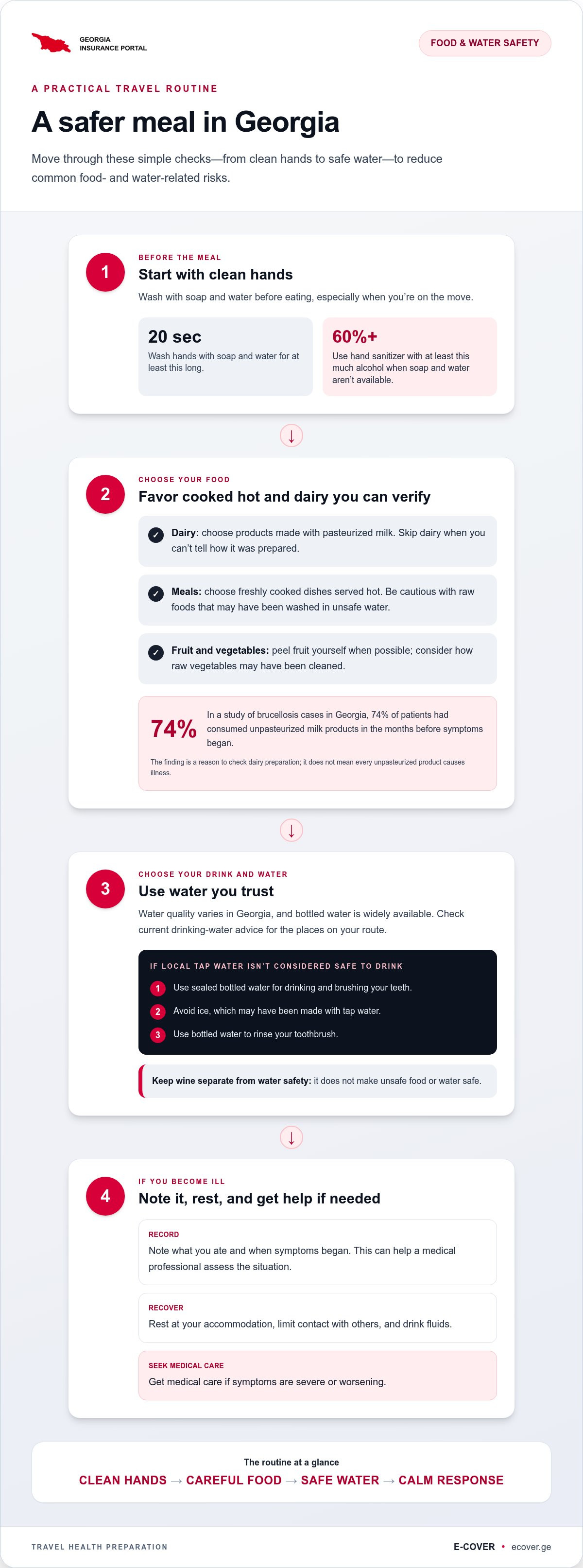
Food-related illness can begin after a meal, so note when symptoms start and what you ate. If you become ill, rest at your accommodation and limit contact with others. Drink fluids and seek medical care if symptoms are severe or worsening. During travel, wash your hands with soap and water for at least 20 seconds, especially before eating. When soap and water aren’t available, use hand sanitizer containing at least 60% alcohol.
Animal contact needs a separate response. After an animal bite or scratch, the Centers for Disease Control and Prevention advises washing the wound with soap and clean water for about 15 minutes and seeking medical care as soon as possible. Dog bites also raise rabies concerns in Georgia. Avoid approaching free-roaming dogs, and get prompt medical attention after a bite or scratch. Use insect repellent on exposed skin to help reduce insect bites.
Prepare for preventable illness before you travel. Hepatitis A vaccination is recommended for most travelers to Georgia, and hepatitis B vaccination is recommended for all travelers. A GP or travel clinic can review your vaccination status six to eight weeks before departure. Recommendations depend on your health history, planned activities, and previous doses. Ask about other routine vaccinations at the same appointment.
Insurance is also part of travel preparation. From January 1, 2026, international travelers to Georgia must carry health and accident insurance covering at least 30,000 Georgian lari for the full length of their stay. Review whether your policy covers planned activities, non-emergency treatment, and emergency repatriation—a sensible habit whether you are hiking in Kazbegi or arranging outdoor holiday excursions with tour operators such as Victory Rental & Safaris. If a clinician refers you to a medical facility, contact your insurer or medical assistance company promptly.
Travel safety planning includes choosing where to go. The US State Department rates South Ossetia and Abkhazia at Level 4, Do Not Travel; UK travel advice advises against all travel to those breakaway regions. Avoid entering these areas and plan your route around them. Before travelling elsewhere, consider how far medical facilities are from your itinerary, especially if you’re heading into mountain areas.
Getting sick in Georgia as a tourist is easier to manage when your preparations reflect your route. Keep your insurance details and medical information accessible, and know where you would seek care if symptoms worsen. For remote destinations, plan how to contact assistance and reach a medical facility.
2. Is it safe to eat the cheese and drink the wine in Georgia?
Common health risks for visitors include food- and water-related illness, particularly from unsafe water or unpasteurized dairy. You can enjoy Georgian cheese and wine more safely by choosing pasteurized dairy, eating thoroughly cooked food, and drinking water you trust.
A study of brucellosis cases in Georgia found that 74% of patients had consumed unpasteurized milk products in the months before symptoms began. This finding makes fresh cheese and other dairy worth checking carefully. Choose products made with pasteurized milk, and avoid dairy when you can’t tell how it was prepared. Brucellosis is an infection associated with infected animals and animal products, so the source and processing of dairy matter.
Cheese isn’t the only food to consider. Choose freshly cooked meals served hot, and be cautious with raw foods that may have been washed in unsafe water. Peel fruit yourself when possible; bananas are practical because you remove the skin before eating. For raw vegetables, consider how they may have been cleaned. Food safety can vary between countries, restaurants, and kitchens, so use the food’s preparation and serving conditions to guide your choice.
Georgia’s wine is part of its food culture, but it doesn’t make unsafe food or water safe. Treat wine as a separate drink, not a way to wash down food you suspect was mishandled. If you’re unsure about a meal, choose a freshly cooked alternative and sealed bottled water. Insect repellent can help reduce bites outdoors, but it won’t prevent food- or water-borne illness.
Water quality varies in Georgia, and bottled water is widely available. Before departure, check current drinking-water advice for the places on your route. A foreign ministry or embassy country information page may provide relevant local guidance. If local tap water isn’t considered safe to drink, use sealed bottled water for drinking and brushing your teeth. Avoid ice, which may have been made with tap water, and use bottled water to rinse your toothbrush.
Hepatitis A is another reason to plan food and water precautions. Vaccination is recommended for most travelers to Georgia, and a travel health appointment can cover vaccination as well as practical advice for your itinerary. Mention plans to eat outside major towns or stay in rural areas so recommendations can reflect your trip.
Follow a simple routine around meals: clean your hands before eating, choose thoroughly cooked dishes, and use safe water for drinking, ice, and toothbrushing. If you become ill after a meal, note what you ate and when symptoms began. This information can help a medical professional assess the situation and recommend next steps.
3. Medical care and evacuation coverage
If you’re in Tbilisi, contact a medical facility for assessment. If you’re in rural Georgia, seek local help promptly and explain your location and symptoms. Facilities are limited outside major towns, and access can be difficult in remote areas at high elevations, according to the Centers for Disease Control and Prevention (CDC). If referred for treatment, contact your insurer or medical assistance company promptly.
If you become seriously ill, follow the clinician’s referral and keep your passport, policy details, and medical records accessible. Some medical providers listed by the UK Foreign, Commonwealth & Development Office have English-speaking staff, but English isn’t assured at every facility. Prepare a written note of your symptoms, allergies, medicines, and emergency contacts to show medical staff if communication is difficult.
Medical costs depend on the facility and treatment needed, including consultations, tests, medicines, and hospital care. Medical services outside the capital are limited, and treatment costs can be high. Visitors should be prepared to pay for treatment as it is provided or use their travel insurer. The UK has no reciprocal healthcare agreement with Georgia, so UK travelers must pay as treatment is provided or use their insurer. Keep receipts and treatment records for any insurance claim.
Plan your medicines before departure. Some medicines permitted in other countries may be confiscated in Georgia or lead to criminal proceedings. Check the legal status of each prescription medicine you plan to carry. Keep supporting documentation with the medicine, complete a customs declaration on arrival, and leave medicines in their original packaging so labels and prescription details remain available.
After a street-dog bite or other possible rabies exposure, wash the wound promptly and seek medical care. A clinician can assess the exposure and whether post-exposure treatment is needed. Don’t delay care while trying to manage the injury alone, especially if you’re far from medical facilities. For remote itineraries, plan how to reach care and communicate your location if evacuation becomes necessary.
Before leaving for Georgia, save your insurer’s assistance details with your policy documents and emergency contacts. If you’re referred to a medical facility, contact your insurer or assistance company promptly. Early contact can help coordinate treatment and any required medical transport.
4. Vaccinations and pre-trip health preparation
Plan your vaccine review before booking day trips from Tbilisi to Kazbegi or other regions. Travel recommendations depend on your health, previous doses, itinerary, and departure date. Consult a healthcare provider or travel health clinic preferably six weeks before travel. Review the latest vaccine recommendations at least 8 weeks before your trip, so there’s time to arrange any recommended doses.
Hepatitis A vaccination is recommended for most travelers to Georgia. Infants aged 6 to 11 months traveling to Georgia should also be vaccinated against hepatitis A. For unvaccinated travelers over 40 with certain health risks, leaving for a hepatitis A risk area in less than 2 weeks may mean receiving a vaccine dose and immune globulin at the same appointment. Immune globulin protection can last up to 2 months, depending on dosage.
Hepatitis B vaccination is recommended for all travelers to Georgia. Unvaccinated travelers younger than 60 are specifically advised to get vaccinated, while unvaccinated travelers aged 60 years and older may also get vaccinated before travel. Bring your vaccination record to the appointment. That record helps the provider review previous doses and identify what preparation suits your destination and health history.
Check routine immunizations, too. International travelers to Georgia should be fully vaccinated against measles, including infants aged 6-11 months. All eligible travelers should be up to date with COVID-19 vaccines. An influenza shot is recommended at least 2 weeks before travel. These steps are useful for trips through busy settings in Tbilisi, as well as journeys involving transport across the country.
Some vaccines need advance planning. If you plan to receive rabies pre-exposure vaccination, start 6 to 8 weeks before travel. It may be relevant for children, veterinarians, wildlife workers, adventure travelers, cave explorers, and people with close animal contact. Discuss likely animal exposure and access to prompt post-exposure care when reviewing the itinerary, especially if you’ll visit rural areas or hike near Kazbegi.
Review entry-related vaccine conditions separately from routine travel recommendations. A yellow fever vaccination certificate may be required if your itinerary includes transit lasting more than 12 hours through an airport in a country with yellow fever risk. Check each connection, including routes through Russia, before departure. Keep your passport, travel itinerary, and vaccination documents together, so you can answer questions about transit and vaccination history accurately.
Use the appointment to make a personal preparation list. Include current medicines, allergies, existing health conditions, planned activities, and travel dates. Ask about hepatitis A and B, measles, influenza, COVID-19, and rabies according to your circumstances. This gives the clinician specific details for tailoring recommendations instead of relying only on a general destination checklist.
5. Emergency services in Georgia
Dial 112 to reach emergency services in Georgia. Save the number in your phone before leaving home, and keep it accessible during journeys between Tbilisi, rural towns, and mountain destinations. Use it for an urgent situation requiring emergency assistance, such as a serious injury or sudden illness. Give the dispatcher your location and describe what has happened as clearly as possible.
If you’re travelling with others, agree on a simple response plan before visiting remote places. Choose a meeting point, share accommodation details, and make sure everyone knows how to call 112. In mountain regions, identify your exact trail, village, or road location before an emergency occurs. A saved map pin or written place name can help you communicate where assistance is needed.
For a non-emergency health problem, contact a medical facility for advice or assessment rather than treating every symptom as an emergency. Medical services are available in Tbilisi, but options outside major towns are limited. Plan ahead if your route includes remote areas, where reaching care may take longer. Keep your accommodation address and relevant medical details ready to share with local staff.
Animal contact calls for prompt action. If a dog or other animal bites or scratches you, wash the wound with soap and clean water for about 15 minutes, then seek medical care as soon as possible. A bite may involve rabies exposure, so don’t wait for symptoms before getting assessed. Avoid approaching free-roaming animals, including dogs near streets, villages, and rural properties.
Also prepare for emergencies that affect travel across regions or near a border. Avoid South Ossetia and Abkhazia: the US State Department rates both at Level 4, Do Not Travel, and UK travel advice advises against all travel to these breakaway regions. Keep your route within areas you intend to visit, and share your itinerary with someone who can respond if you miss an agreed check-in.
Before departure, store essential details together: your passport information, accommodation address, emergency contacts, medication list, and travel insurance documents. If a medical facility refers you for treatment, contact your insurer or medical assistance company promptly. Keep receipts and medical records together, too. These steps can make it easier to explain your situation and manage practical arrangements while you focus on care.
Review your travel insurance coverage before departure, including medical treatment and emergency repatriation, so your preparation matches your route and activities.
E-COVER: Travel Insurance Policies
E-COVER offers travel medical insurance for foreign visitors preparing to travel in Georgia. Since January 1, 2026, international travelers must carry health and accident insurance covering at least 30,000 Georgian lari for their full stay. E-COVER’s online policies are designed to meet these state coverage requirements.
Review your policy before departure and consider your plans when deciding what protection you need, including cover for medical treatment and evacuation. E-COVER offers Student Insurance, long term travel insurance policies, and Digital Nomad Insurance for students and travelers planning longer stays.
To prepare your coverage for a trip to Georgia, contact E-COVER or visit ecover.ge.
Make your preparation part of the trip plan
Before departure, turn your health preparations into a simple travel routine: keep important documents accessible, share your itinerary with someone you trust, and know how you’ll get help if plans change. Thinking ahead about getting sick in Georgia as a tourist can also help you choose cover that fits your plans, whether you’re visiting briefly, studying, or staying longer.
E-COVER offers Travel Insurance Policies, Student Insurance, and long term travel insurance policies. Consider your itinerary and planned activities when reviewing your insurance needs, then keep your policy details within reach during your trip. Preparation can’t remove every uncertainty, but it can make the next steps clearer if you need medical support away from home.
For a practical next step, contact E-COVER about travel insurance. With the essentials arranged, you can focus on experiencing Georgia with care and confidence.
Frequently Asked Questions
Do I need malaria pills for Georgia?
Malaria pills aren’t generally needed for travel to Georgia because the World Health Organization certified the country malaria-free on January 23, 2025. Instead, plan for other travel-health concerns, including food and water safety, routine vaccinations, and insect bites. If your itinerary includes another country, assess malaria advice for that destination separately. Georgia’s malaria-free status doesn’t rule out illnesses spread through contaminated food, water, or insects.
What vaccines do I need for Georgia?
There isn’t one vaccine schedule for every traveler, but hepatitis A vaccination is recommended for most visitors, and hepatitis B vaccination is recommended for all travelers. Make sure measles vaccination and routine immunizations are up to date, including COVID-19 vaccination if eligible. Review your health history, planned activities, and previous doses with a travel-health professional. Infants aged 6 to 11 months traveling to Georgia should also receive hepatitis A vaccination.
Is Georgia (the country) safe to visit in 2026?
Georgia is rated Level 1, Exercise Normal Precautions, by the US State Department. South Ossetia and Abkhazia are rated Level 4, Do Not Travel, so keep them out of your itinerary. Safety also depends on your plans: a city stay differs from a remote mountain trip, where medical access may be harder. Share your route with someone at home and keep emergency details accessible during travel.
Is it safe to eat the cheese and drink the wine in Georgia?
Yes, travelers can enjoy local cheese and wine, but food preparation and dairy sourcing matter. Ask whether fresh cheese is made with pasteurized milk, and choose meals cooked thoroughly and served hot. Wine doesn’t make unsafe food safe, so treat food and drink as separate choices. For a picnic or road stop, pack sealed drinking water and food that doesn’t need to be washed with local tap water.
What number do you call for an ambulance in Georgia?
Call 112 for emergency services in Georgia, including an ambulance. Tell the operator what happened, where you are, and how responders can identify your location. If you’re outside a town, provide the nearest village, road, landmark, or accommodation name. Save 112 in your phone before travelling, and share the number with anyone travelling in your group so they can call if you’re unable to.
Where can tourists find English-speaking doctors and hospitals in Georgia?
Some staff at medical providers listed by the UK Foreign, Commonwealth & Development Office in Georgia speak English. Medical facilities are available in Tbilisi, while options outside major towns are limited. Before travelling beyond the capital, save the address of a medical facility near your route and write down key symptoms, allergies, and medicines. This note can help you communicate essential details if English-speaking staff aren’t available.
Are pharmacies easy to find in Georgia, and can tourists buy prescription medicine?
Don’t rely on buying a particular prescription medicine after arrival. Georgia’s rules for some medicines differ from those in other countries, and certain medicines may be confiscated or lead to criminal proceedings. Before departure, check the legal status of each medicine you plan to carry. Keep prescriptions and supporting documents with your medicines, and complete a customs declaration on arrival when required.
What should tourists do if they need prescription medication or have a pre-existing condition in Georgia?
Plan medication and healthcare needs before departure. Carry prescribed medicines with supporting documentation, and review Georgia’s rules for those medicines before packing. If you have a pre-existing condition, identify what care you may need and whether it’s available along your itinerary. Keep a written list of medicines, allergies, and relevant medical records with your passport details. Travelers with health conditions should pay particular attention to suitable insurance and access to care.


