

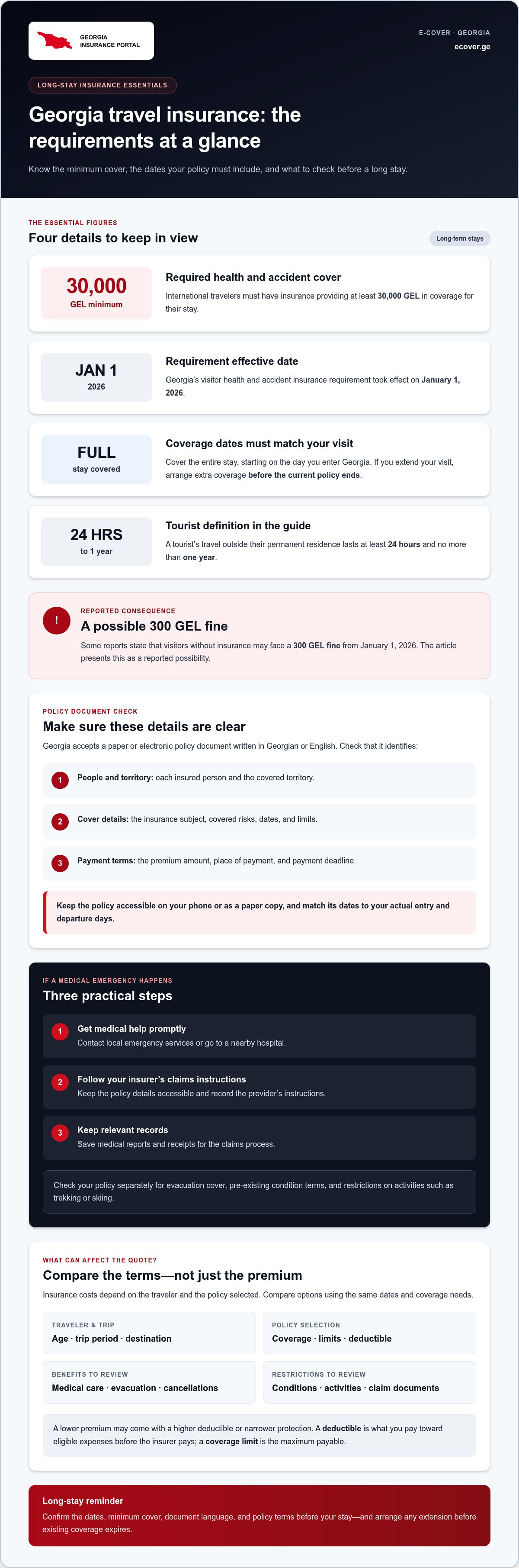
Georgia’s insurance requirement is an entry rule, not an optional extra: from January 1, 2026, international travelers must have health and accident insurance for their stay. A long-term travel insurance policy for Georgia must provide at least 30,000 GEL in coverage and cover the entire stay, starting on the day you enter the country. Planning a longer visit means arranging coverage for every day, including any extension.
Before committing to months abroad, it helps to know what Georgia requires, what affects insurance costs, and what to do if you need medical care. This guide explains the rules for long-term travel insurance in Georgia, the key policy details to compare, and practical steps to take in a medical emergency. It also outlines what to check in your policy document before your stay.
Key Takeaways
- Keep your policy document accessible and make sure its dates cover your full stay, including any extension.
- Compare long-stay cover by looking beyond the premium: medical emergencies, evacuation and other included protections affect the value.
- Choose between a continuous long-term policy and annual multi-trip cover based on how often you travel and the length of each visit.
- In an emergency, seek medical help promptly and follow your insurer’s claims process, keeping relevant records and receipts.
What should I do in case of a medical emergency in Georgia?
If a medical emergency occurs, seek immediate help from local emergency services or a nearby hospital, then follow your insurer’s claims instructions. Georgia’s visitor insurance requirement took effect January 1, 2026: cover must be at least 30,000 GEL and last for the entire stay, starting at entry. The policy can be paper or electronic, and must be written in Georgian or English.
Medical services include emergency care at hospitals and clinics. Emergency evacuation may also be covered, but it is a separate benefit to identify in the policy, along with who coordinates it and which expenses qualify. Keep the policy details accessible, record the provider’s instructions, and save medical reports and receipts.
Pre-existing conditions aren’t automatically covered by every policy. Before buying, read the policy definitions, exclusions, and terms relating to medical conditions to understand whether treatment connected to a pre-existing condition is covered.
Trekking, skiing, and other adventure activities may be treated differently from ordinary activities. Read the policy’s activity-related exclusions and requirements. A medical coverage limit alone doesn’t establish that a particular activity is covered.
If you extend your stay in Georgia, arrange coverage for the additional days before your current policy ends. Don’t assume the original policy dates change automatically. The insurance requirement applies throughout your stay, so avoid a gap in coverage.
Trip cancellation and interruption benefits can address covered expenses if a listed event disrupts travel before departure or during the trip. Review the qualifying events, documentation rules, and limits. A deductible is the amount you pay toward eligible expenses before the insurer pays; a coverage limit is the maximum payable. These terms affect how much credit-card protection or personal funds you may need for delays, treatment, or evacuation.
Georgia travel insurance costs and policy options
Insurance costs depend on the policy’s duration, benefits, limits, and deductible. Compare those terms with your itinerary and the expenses you could face in Georgia.
Factors affecting insurance costs
The insured person’s age, trip period, destination, and chosen coverage affect a travel insurance quote. A longer period can change the premium, while higher medical limits or added benefits can also affect it. Compare policies using the same dates and coverage needs. Check whether the insurance policy covers the full stay from entry, and make sure the dates match your passport and planned departure.
Healthcare and medical costs
Medical bills vary by service and facility. These examples show why the medical limit matters, even for tourists planning routine care. Compare the limit with the care you may need, and check whether the policy requires you to pay upfront or contact the insurer first.
Policy costs and exclusions
There isn’t one affordable premium for every traveler: duration, age, deductible, and selected benefits shape the quote. The cost of insurance itself isn’t the only comparison point. Review the coverage limit, deductible, claims process, and any restrictions before entering the country. A lower premium can mean a higher deductible or narrower protection, so compare the actual benefits rather than price alone.
Exclusions and activity restrictions determine which risks remain your responsibility. Read the policy wording for pre-existing conditions, adventure activities, evacuation, and cancellation or interruption benefits. Check what documentation is needed for a claim, and note any conditions that could leave treatment or travel expenses uncovered. To review relevant Georgia travel insurance coverage, compare the policy terms against your dates and planned activities before purchase.
Insurance options for long-term stays
For a stay lasting months, choose a policy whose dates cover every day in Georgia. The mandatory tourist health and accident insurance requirement took effect January 1, 2026. It applies to international travelers, including visitors entering without a visa. Required coverage is at least 30,000 GEL, and the policy must cover the full stay from entry.
A long-term policy can cover a planned stay over one period. Check that its dates include your entry and departure days, and arrange additional coverage before the policy ends if you extend your visit. Don’t assume an existing policy automatically renews or extends.
Prepare the policy document for border or airline checks. Georgia accepts paper or electronic documents written in Georgian or English. Make sure the document clearly identifies:
- Each insured person and the covered territory.
- The insurance subject, covered risks, dates, and limits.
- The premium amount and the place and deadline for payment.
Keep the document saved on your phone and retain an accessible copy of the policy details. This helps you present the required information while visiting, and locate assistance details if you need care at clinics. Check that every insured traveler appears by name and that the coverage dates match the actual entry and departure dates.
Georgia’s tourist definition includes travel outside a person’s permanent residence lasting at least 24 hours and no more than one year. For a stay approaching that period, compare the policy term against your exact plans rather than assuming a shorter policy will suffice. Some reports state that visitors without insurance may face a 300 GEL fine from January 1, 2026. Continuous coverage and complete documents help address the mandatory requirement throughout the visit.
Annual and multi-trip travel insurance for Georgia
An annual multi-trip policy can suit travelers making several visits during one policy year. A single-trip policy may fit better if you plan one continuous stay in Georgia. Compare the policy’s trip-duration rules with your itinerary. Annual cover doesn’t automatically mean every day of a long stay is insured.
Georgia’s mandatory health and accident insurance requirement applies to international travelers from January 1, 2026. Each visit needs coverage for its entire duration, starting from entry, with at least 30,000 GEL in coverage. Before departure, match the insured dates to the specific stay in Georgia. If an annual policy has gaps between trips, those gaps don’t cover time spent in the country.
Check how the policy defines separate trips, when cover starts, and whether returning home resets the permitted trip length. Then compare medical limits, deductibles, emergency assistance, and exclusions for accidents or planned activities. For example, a traveler visiting Tbilisi and Batumi on separate trips should check that both visits fall within the policy dates and conditions.
Keep the policy document ready for each border crossing. It may be electronic or printed, but must be in Georgian or English. Confirm that it identifies insured people, covered territory, dates, risks, limits, premium, and payment details. UAE citizens may stay visa-free for up to one year, while UAE visa or residence-permit holders may stay 90 calendar days within any 180-day timeframe. Insurance dates still need to cover the actual stay.
Choose annual multi-trip cover for repeated visits only if its terms cover each visit’s duration and the Georgian requirement. For one extended stay, compare a continuous policy against your exact entry and departure dates. Compare travel insurance options against your Georgia travel schedule.
E-COVER: Travel Insurance Policies
E-COVER provides travel insurance policies for foreign visitors to Georgia, including long-term travel insurance policies. Its online policies are designed to meet Georgia’s mandatory health insurance requirements, helping travelers arrange coverage for their planned stay. Students and digital nomads can also consider the relevant insurance options for their travel circumstances.
Before buying, compare your entry and departure dates with the policy period, then review the coverage details and policy document. The policy must be purchased before or at the moment of entry, issued in Georgian and English, and meet the minimum requirements for duration and aggregate coverage.
Visit ecover.ge to explore insurance options for your stay in Georgia.
Make your next step a coverage decision
Before you finalize your Georgia plans, turn your itinerary into a clear coverage checklist. Note your travel dates, the activities you expect to take part in, and whether you’ll study or stay for an extended period. Then compare those needs with the policy wording, so your decision reflects your real plans rather than a generic trip profile. Choosing long-term travel insurance in Georgia is part of preparing for the stay, not just completing paperwork.
E-COVER offers travel insurance policies, student insurance, and long-term travel insurance policies for visitors to Georgia. If you’re ready to consider cover for your own plans, contact E-COVER about Georgia cover and review the option that fits your trip. A thoughtful choice now can help you begin your stay with your insurance documents organized and your next steps clear. Safe travels, and enjoy planning your time in Georgia.
Frequently Asked Questions
Why Is Travel Insurance Required for Georgia?
Georgia requires international visitors to have health and accident insurance from January 1, 2026. The rule helps ensure visitors have medical coverage during their stay, rather than relying entirely on personal funds if illness or an accident occurs. Before departure, keep your policy document available with your travel papers, so you can present proof if requested during your journey.
Does the insurance cover accidents outside Tbilisi?
Yes, E-COVER’s policy coverage applies throughout Georgia, except in the country’s occupied territories. This matters if your itinerary includes travel beyond major urban areas, such as a road trip between towns or a stay in a rural area. Check that your planned destinations fall within the covered territory, and keep your insurer’s assistance details accessible while travelling.
Staying long-term in Georgia?
For long-term travel insurance in Georgia, choose dates that cover your entire planned stay, including your entry and departure days. If you extend your visit, arrange coverage for the additional period before your current policy ends. E-COVER offers long-term travel insurance policies for visitors planning an extended stay, including students and digital nomads.
Does Georgia require travel insurance for foreign visitors, and what are the current rules?
Yes. From January 1, 2026, foreign visitors must have health and accident insurance with an aggregate limit of at least 30,000 GEL. Buy the policy before or at the moment of entry, and make sure its dates include both entry and departure. The document must be issued in Georgian and English; travelers can present a printed copy or digital PDF.
What does long-term travel insurance for Georgia typically cover?
Coverage depends on the policy wording. E-COVER’s travel medical insurance includes ambulance services, emergency medical care, urgent outpatient and inpatient treatment, urgent dental treatment, medical evacuation, repatriation, and COVID-19-related medical expenses. Review the exclusions and claim conditions before purchase. For example, its coverage excludes Georgia’s occupied territories, so planned travel there isn’t insured under the policy.
Which insurers offer long-stay travel insurance that covers Georgia?
E-COVER offers long-term travel insurance policies for visitors to Georgia, alongside Travel Insurance Policies and Student Insurance. Its online purchase process lets travelers arrange cover for their own travel dates. Before buying, enter a policy period that includes the border-crossing day and departure day, then review the coverage document and confirm it meets Georgia’s entry requirements.


