

A medical claim process for tourists in Georgia usually means keeping your medical records and bills, then submitting them to your insurer according to its claim instructions. Since January 1, 2026, tourists entering Georgia must have health and accident insurance with minimum coverage of 30,000 GEL for their entire stay, starting from entry.
An unexpected illness can make paperwork difficult, especially when you’re unfamiliar with local healthcare arrangements. Knowing what to do after receiving care, which documents to keep, and how costs may vary can help you prepare. This guide explains the medical claim process for tourists in Georgia, including the steps to take, differences between emergency and routine care, and how travel medical insurance works.
Key Takeaways
- Understand why routine appointments and emergency care can lead to very different bills, and which details affect the final cost.
- Learn practical steps for finding medical care in Georgia and keeping treatment details organized from the start.
- Follow your insurer’s claim instructions and keep the records and receipts that can support your reimbursement request.
- Prepare key policy and treatment documents before submitting a claim, so you can provide a clearer account of what happened.
Emergency room and routine doctor visit costs
A consultation may be only one part of the bill. Tests, imaging, and prescribed treatment can add separate charges. For example, a visit followed by an MRI may involve both consultation and scan costs. Ask for an itemized bill so each service is clearly recorded.
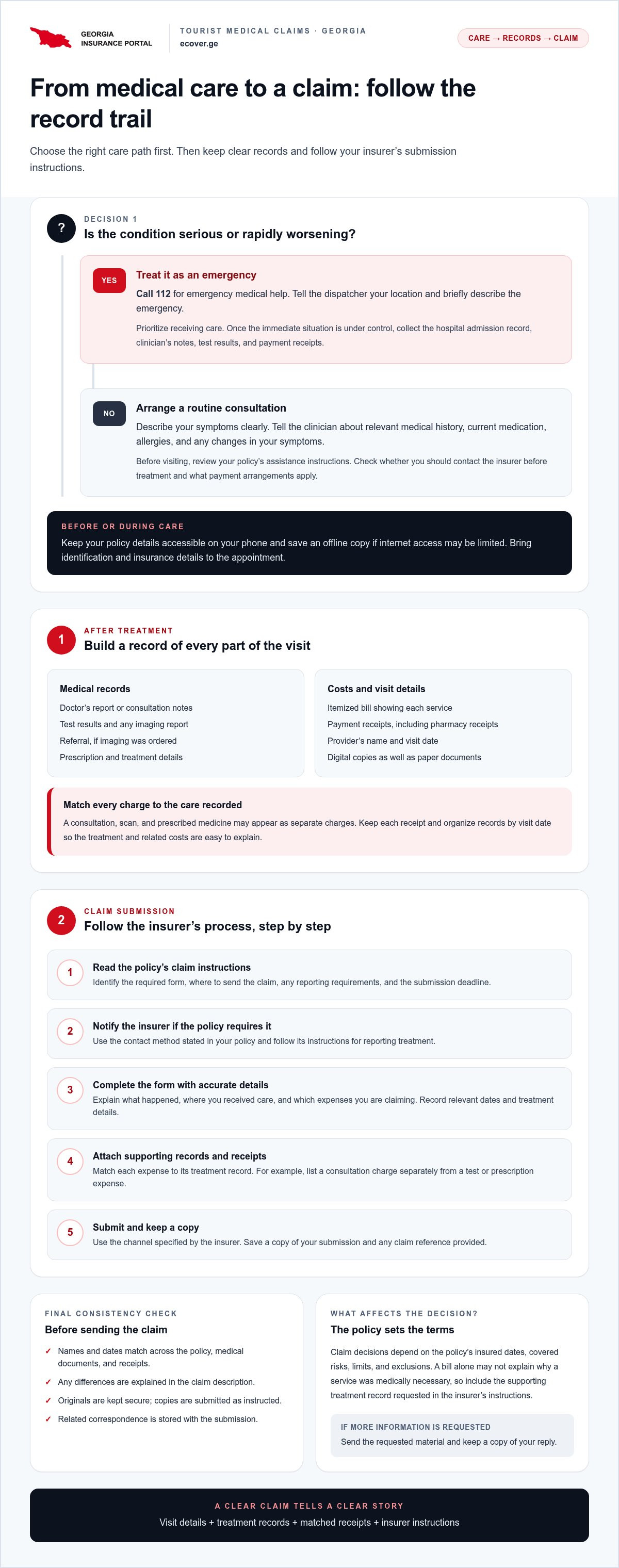
Call 112 for emergency medical help in Georgia. Tell the dispatcher your location and briefly describe the emergency. At the hospital, keep the admission record, clinician’s notes, test results, and payment receipts. These details help explain what care you received and support your insurer’s review.
Medication can add another expense after either type of visit. The medicine prescribed and the treatment needed affect the cost. Keep the prescription and pharmacy receipt with your medical paperwork. If a doctor orders imaging, retain the referral and scan report too. These records help link each charge to the treatment received.
Compare the bill with the services recorded in your medical documents. A routine appointment without tests differs from an emergency visit involving imaging or prescribed medicine. Consultations, scans, and medication may appear as separate charges, so keep each receipt rather than relying on a single total. When preparing a claim, organize records by visit date and match each bill to its treatment. This makes the sequence of care and related costs easier to explain.
Before leaving the clinic or hospital, request copies of available records and proof of payment. Keep digital copies as well as paper documents, and note the provider’s name and visit date. For emergency care, prioritize contacting 112 and receiving treatment; collect paperwork once the immediate situation is under control. Clear records help you describe the care and costs when you proceed with an insurance claim.
How do tourists get medical treatment in Georgia?
First decide whether you need emergency care or a routine consultation. Seek urgent medical attention for a serious or rapidly worsening condition. For a non-urgent concern, arrange a doctor’s appointment and describe your symptoms clearly. Be ready to tell the clinician about your diagnosis, medication, or allergies. If your symptoms change, explain what changed and when.
Before visiting a facility, review your policy’s assistance instructions. Find out whether you should contact the insurer before treatment and what payment arrangements apply. Understanding these instructions is the first step in the medical claim process for tourists in Georgia. Keep your policy details accessible on your phone, and save an offline copy in case internet access is limited.
- Bring identification and your insurance policy details to the appointment.
- Explain your symptoms, relevant medical history, and current medication.
- Request written records of the consultation, tests, and treatment.
Georgia permits required tourist insurance issued by a Georgian or foreign insurance company. Proof may be shown electronically or on paper, and must be written in Georgian or English. Keep a readable copy available when arranging care. The policy information can help the facility record your insurer and coverage details accurately.
If your condition allows, clarify the recommended treatment and proposed tests before they begin. Ask which services are included in the estimate, and request separate records for consultations, investigations, and medication. If you pay directly, keep proof of payment and all paperwork provided by the facility.
After treatment, organize records by visit and keep digital copies. A doctor’s report, test result, and prescription each document a different part of the episode. The medical claim process for tourists in Georgia is easier to manage when your records are grouped by visit and ready to follow the insurer’s instructions.
People entitled to enter Georgia under its international treaties and agreements are exempt from the tourist insurance requirement. If you believe this applies to your visit, confirm your entitlement and keep relevant documents accessible. Do not assume the exemption changes how a facility handles payment or records. When arranging treatment, clarify costs, request written records, and follow any assistance instructions that apply to your policy.
How do tourists file medical insurance claims in Georgia?
Begin with your insurer’s claim instructions, since submission steps and covered expenses depend on the policy. Check how to report treatment, where to send the claim, and whether the insurer requires its own form. Note any submission deadline and keep a copy of the policy details you used. Following the insurer’s process helps make the claim easier to assess.
If you paid for care in Georgia, gather treatment records and proof of payment before completing the claim form. Describe the visit clearly, including what happened, where you received care, and which expenses you’re claiming. Match each charge to the relevant treatment record. For example, list a consultation charge separately from a test or prescription expense.
- Read the policy’s claim instructions and identify the required form.
- Contact the insurer using the method stated in your policy, if notification is required.
- Complete every relevant section with accurate dates and treatment details.
- Attach supporting records and receipts, then submit through the stated channel.
- Save a copy of the submission and any claim reference provided.
Before sending the form, check that names and dates match across the policy, medical documents, and receipts. Explain any differences in the claim description rather than leaving conflicting details unexplained. If the insurer requests more information, send the requested material and keep a copy of your reply. Store related correspondence with your original submission.
Claim decisions depend on the policy terms, including insured dates, covered risks, limits, and exclusions. A bill alone may not explain why a service was medically necessary, so include the supporting treatment record requested in the insurer’s instructions. Keep originals secure and submit copies unless the insurer specifically requires originals. This creates a clear record of your medical claim in Georgia, from treatment through submission and follow-up.
What documents are needed for a medical claim in Georgia?
Prepare your policy details, identification, and treatment records before submitting a claim. The insurer’s instructions specify which documents to send and how to submit them. Start with the claim form, then gather records linking the treatment to each expense. Keep copies of everything you send.
Your insurance policy should identify the insured parties, covered territory, subject of insurance, coverage dates, insured risks, coverage limits, premium amount, and place and deadline of payment. These details help match the claim to your coverage. Include the policy certificate or confirmation showing your name and insurance dates. Check that the spelling matches your identification.
- Passport or other identification used for the policy.
- Policy certificate and completed claim form.
- Medical report describing the consultation, diagnosis, and treatment.
- Test results, prescriptions, or referrals linked to the visit.
- Itemized bills and receipts showing payment.
For example, if a doctor orders a scan, include the referral, scan report, and related bill. For prescribed medication, keep the prescription and pharmacy receipt. A receipt shows that you paid, while a medical record explains why the service or medicine was provided. Together, these documents give a clearer account of the treatment.
Check that dates, names, and amounts match across the claim form, policy, and receipts. If a hospital bill combines several services, request an itemized copy showing each charge. Keep original records secure and submit copies unless your insurer requests originals. Save a copy of the completed claim and attachments, along with confirmation of submission.
Before sending your documents, compare them with the insurer’s list of required claim materials. Add any requested supporting information, such as correspondence about the treatment or payment. Keep the files together by visit, with a clear label for each document. Explore travel coverage for Georgia and keep your policy documents accessible during your trip.
E-COVER: Travel Insurance Policies
E-COVER provides travel medical insurance for foreign visitors to Georgia. If you’re preparing for a trip, reviewing coverage before departure is a practical next step after learning about local care costs and claim documents. Check that your policy details, including the insured travelers and coverage dates, match your plans.
E-COVER also offers Student Insurance, long term travel insurance policies, and Digital Nomad Insurance. These options serve different travel situations, so consider the type of stay you’re planning when selecting coverage. Keep your policy information accessible during your trip, along with the insurer’s claim instructions, so you can refer to them if you need medical care.
Visit E-COVER online to explore travel insurance options for Georgia.
Prepare your cover before your trip
A clear medical claim process for tourists in Georgia begins with choosing coverage that fits the kind of stay you’re planning. Before departure, keep your policy information and claim instructions easy to access, so you can follow the insurer’s requirements if you need care. E-COVER offers Travel Insurance Policies, Student Insurance, and long term travel insurance policies for different travel needs.
Take a moment to review your policy documents and understand how to submit a claim. If you’re already handling a medical claim, organize your paperwork and questions before reaching out. For help with your medical claim, contact E-COVER about your claim. A little preparation can help you focus on your trip and take the next step with confidence.
Frequently Asked Questions
Does Georgia require tourists to have travel medical insurance?
Yes. Georgia requires foreign visitors to have health insurance from January 1, 2026, subject to specified exemptions. The aggregate coverage limit must be at least 30,000 GEL, and the policy must cover the stay, with dates including entry and departure. Check your policy documents to confirm which languages they are available in and when coverage begins. Check that your policy covers the full length of your stay.
How do tourists pay medical bills and get reimbursed in Georgia?
Payment arrangements depend on the medical facility and your policy terms. Ask whether the facility can bill your insurer directly; otherwise, you may need to pay and submit a reimbursement claim. If you pay for a consultation yourself, for example, keep its receipt with the treatment record. Submit the claim according to your insurer’s instructions, and retain copies of forms and follow-up correspondence.


