

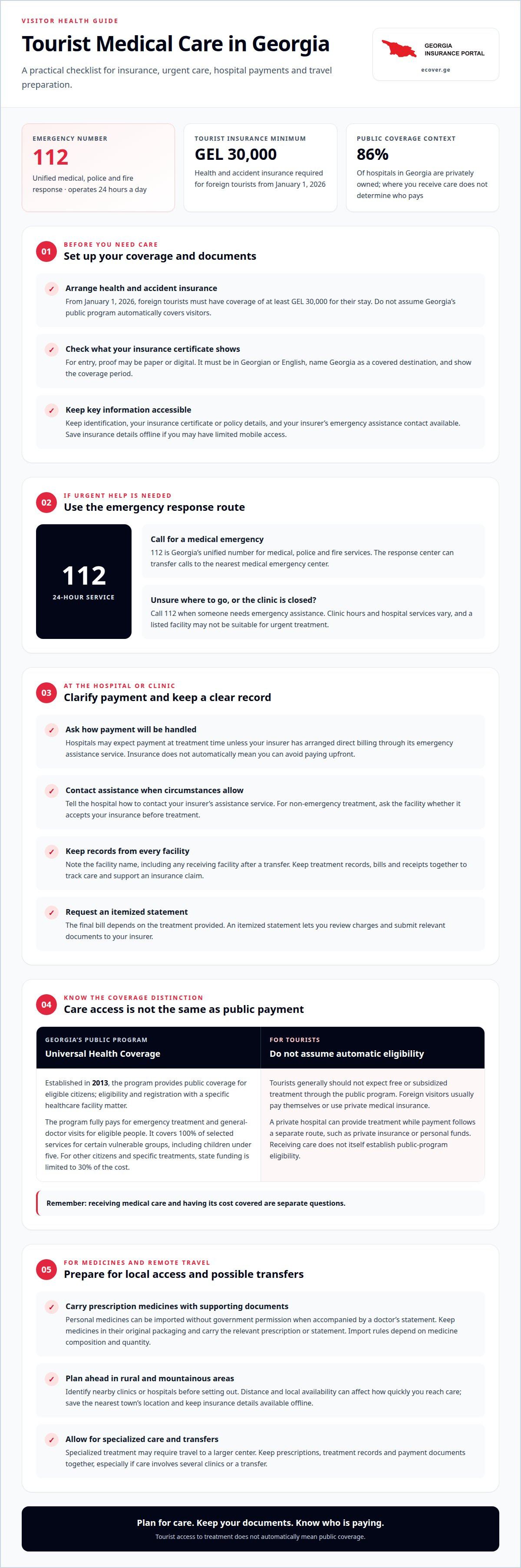
For tourists, public healthcare access in Georgia shouldn’t be treated as free coverage: foreign visitors generally pay for medical services themselves or use private medical insurance. Call 112 for an emergency. Since January 1, 2026, foreign tourists must have health and accident insurance with at least GEL 30,000 in coverage for their stay.
It’s sensible to know where to seek care before illness or injury interrupts a trip. This guide explains how Georgia’s public and private healthcare systems work for visitors, what to expect when seeking emergency treatment, and how insurance fits in. You’ll also learn why a tourist’s access to state-funded care differs from coverage for people enrolled in Georgia’s public program, so you can plan for treatment without assuming public services will pay for it.
Key Takeaways
- Call 112 for an emergency in Georgia, and understand how hospital payment arrangements may affect what you pay upfront.
- Public healthcare programs serve eligible residents; a visitor shouldn’t assume they automatically cover treatment.
- From January 1, 2026, tourists need health and accident insurance with at least GEL 30,000 in coverage for their stay.
- Learn what insurance documents should show and how to prepare for care through Georgia’s public and private healthcare systems.
Emergency services and hospitals in Georgia
For a medical emergency, call 112, Georgia’s unified number for medical, police, and fire services. The emergency response center operates 24 hours a day and can transfer calls to the nearest medical emergency center.
Hospitals, Clinics, and Closures
Hospitals and clinics provide different points of access to care, while emergency dispatch can direct urgent cases to medical services. In Tbilisi or elsewhere, use 112 if someone needs emergency assistance and you’re unsure where to go. Clinic opening hours and hospital services can vary, so a listed facility may not be suitable for urgent treatment. If a clinic is closed, call 112 for emergency help rather than relying on that clinic.
For your records, note the facility’s name and keep copies of treatment records and bills. These documents help you track the care received and support an insurance claim. If you’re transferred, record the name of the receiving facility as well.
Hospital Payment Expectations
Hospitals may expect payment at the time of treatment unless an insurer has arranged direct billing through its emergency assistance service. Insurance does not automatically mean you can avoid paying the hospital first; the billing arrangement matters. When circumstances allow, contact your insurer’s emergency support and keep all receipts and treatment documents.
The final bill depends on the treatment provided. Ask for an itemized statement so you can review the charges and submit relevant documents to your insurer.
Tourist Eligibility for Subsidized Care
Tourists generally shouldn’t expect free or subsidized treatment through Georgia’s public healthcare program. Foreign visitors usually pay for medical services themselves or use private medical insurance, so public healthcare access for tourists in Georgia is not automatic.
This distinction matters in an emergency: receiving care and having its cost covered are separate issues. Keep your insurance details accessible and tell the hospital how to contact your insurer’s assistance service. For non-emergency care, ask the facility whether it accepts your insurance before treatment, then keep the records and receipts.
Georgia’s public and private healthcare systems
Georgia established its Universal Health Coverage Program in 2013. It provides public coverage for eligible citizens, but it isn’t blanket coverage for every person receiving care. A visitor should distinguish access to a hospital or doctor from eligibility for state-funded payment. Those are separate questions, and registration and eligibility affect how the program applies.
The program fully pays for emergency treatment and visits to general doctors. It also covers 100% of selected medical services for certain vulnerable groups, including children under five. For other citizens and specific treatments, state funding is limited to 30% of the cost. These rules describe program coverage, not automatic benefits for every patient in Georgia.
Using the program also requires choosing and officially registering with a specific healthcare facility. That facility is the access point for covered services, so registration matters before relying on public coverage. A tourist shouldn’t assume that a facility’s participation makes them eligible. Eligibility depends on the person’s status and the service provided.
Private provision is a major part of the system: 86% of hospitals in Georgia are privately owned. A private hospital may deliver treatment while payment follows a separate route, such as private insurance or the patient’s own funds. For example, receiving care at a private facility doesn’t itself establish public-program eligibility. Patients should understand the provider and payment arrangement as distinct parts of care.
For travelers, this public-private distinction helps explain why a medical visit can be available without being publicly funded. Before non-emergency treatment, identify whether you’re relying on state coverage, private insurance, or personal payment. The public program’s registration rules and service limits matter to citizens, while a tourist’s coverage depends on their own arrangements. If you’re preparing for a stay, travel insurance for Georgia can help address the separate question of visitor coverage.
Travelers' health information
For medical visits, keep identification and your insurance certificate or policy details accessible. For entry, proof of health insurance can be paper or digital and must be in Georgian or English; the policy should show Georgia as covered and include the coverage period. These details help a hospital understand your coverage and support insurance-related paperwork.
Tourists can use pharmacies in Georgia, but being able to obtain a medicine locally doesn’t mean every prescription medicine can be brought across the border. Import rules depend on a medicine’s composition and quantity. Personal medicines can be imported without government permission when accompanied by a doctor’s statement. Keep medicines in their original packaging and carry the relevant prescription or doctor’s statement. For Australian travelers organizing their health consultations and documentation before departure, digital telehealth platforms like Aussie Scripts offer convenient access to routine online healthcare services.
In rural and mountainous areas, identify nearby clinics or hospitals before setting out, since distance and local availability can affect how quickly you reach care. For a remote route, save the location of the nearest town and keep your insurance details available offline. This can help if mobile access is limited or you need to explain your location while seeking assistance.
Specialized treatment may require travel to a larger center, so consider possible transfers when planning remote excursions. American travelers can contact the U.S. Embassy for help finding medical care. An embassy can help locate care, but it doesn’t replace health insurance or determine how a hospital bill is paid. Keep treatment records, prescriptions, and payment documents together, especially if care involves several clinics or a transfer. This creates a clear record for follow-up and any insurance claim.
Can tourists access public healthcare in Georgia (the country)?
Tourists can seek medical treatment in Georgia, but receiving care doesn’t automatically grant access to state-funded benefits. Georgia’s Universal Health Coverage Program began in 2013 and is organized around eligible people and registered healthcare facilities. For visitors, the key distinction is between treatment being available and the program paying for it.
The program requires a person to select and officially register with a specific healthcare facility. It fully pays for emergency treatment and visits to general doctors for eligible patients. Selected services for certain vulnerable groups, including children under five, receive 100% coverage. Those rules describe program benefits, not automatic coverage for every tourist who visits a hospital or clinic.
For other citizens and specific treatments, state funding is limited to 30% of the cost. This makes eligibility and the type of service important when determining how the program applies. A visitor should plan to pay for medical services personally or use private medical insurance, rather than assuming public funding will cover an appointment, examination, or hospital treatment.
Consider two different cases: an eligible person registered with a facility receives a covered service, while a tourist seeks care without that program status. The same clinic visit can involve different payment arrangements. Before non-emergency care, tell the facility you’re visiting as a tourist and provide your insurance details. In an emergency, seek treatment first, then keep clinical records and payment documents for any insurance claim.
Public healthcare access for tourists in Georgia is best understood as access to treatment, not a promise of subsidized payment. If you’re arranging a trip, explore travel insurance options for Georgia to prepare for medical expenses outside the public program.
E-COVER: Travel Insurance Policies
E-COVER offers travel insurance policies for visitors preparing to meet Georgia’s entry insurance requirement and manage medical expenses during their stay. Starting January 2026, international travelers need health insurance, and E-COVER provides comprehensive coverage for foreign visitors designed to meet the legal entry requirements.
Private insurance serves a different purpose from Georgia’s public healthcare program: it provides a way to arrange visitor coverage rather than relying on eligibility intended for residents. Before traveling, review your policy for the covered area, coverage period, and required benefits. Keep proof accessible digitally or on paper, and know how to contact your insurer if you need care.
Students, long-term travelers, and digital nomads can also consider insurance options suited to their travel circumstances. Visit ecover.ge to explore coverage for your trip.
Make your medical arrangements before departure
Plan for healthcare alongside accommodation and transport. If you're also exploring travel options and budgeting strategies across the United States, Cheap Vacations America provides helpful guides and tips. Before leaving, organize your policy documents so they’re easy to access, and keep a digital copy available during your trip. Being prepared can make it easier to explain your coverage and handle paperwork if you need treatment.
Planning around public healthcare access for tourists in Georgia means considering how you’ll manage medical expenses instead of assuming public services will cover every visit. E-COVER offers travel insurance policies, student insurance, and long-term travel insurance for different travel circumstances. Choose an option suited to your trip, then review its terms and keep the relevant documents accessible.
Give yourself time to prepare before departure. Contact E-COVER about travel cover and take the next step toward a more prepared trip.
Frequently Asked Questions
Where can Foreigners Find Treatment in Georgia?
Foreign visitors can seek treatment at hospitals and clinics across Georgia. For urgent symptoms, call 112 rather than waiting for a routine clinic appointment. For planned care, identify a suitable facility near your accommodation and keep its name and address accessible. In Tbilisi and other cities, the appropriate location depends on the service needed, such as general medical care or hospital treatment.
What emergency medical care must Georgian public hospitals provide to tourists?
Georgia’s public program fully funds emergency treatment for eligible patients, but that does not mean every tourist receives emergency care free through the program. A visitor’s eligibility and payment arrangement are separate from the need to seek urgent help. Call 112 in a medical emergency; the response center can transfer the call to the nearest medical emergency center.
How much do public hospital visits and emergency treatment cost in Georgia?
These are estimates of treatment costs, not guaranteed bills for every case. The services provided determine the final charges. Ask for an itemized bill and keep receipts and medical records if you plan to submit an insurance claim.
How can tourists call an ambulance in Georgia, and what is the emergency number?
Call 112 to reach Georgia’s unified emergency number for medical, police, and fire services. The emergency response center operates 24 hours a day and can transfer medical calls to the nearest emergency center. Give the operator your exact location, a callback number, and a concise description of the emergency. If you’re traveling with someone, have one person make the call while another stays with them.
How do public healthcare services for tourists differ from private clinics in Georgia?
Public healthcare funding depends on eligibility under Georgia’s Universal Health Coverage Program and registration with a healthcare facility. A tourist shouldn’t assume these conditions apply simply because a clinic is public or provides emergency care. Private clinics and hospitals have their own payment arrangements. Before planned treatment, clarify whether you’ll pay directly or use private insurance, and keep written billing records.
Where can tourists find English-speaking public hospitals or clinics in Tbilisi and other Georgian cities?
For emergency help, call 112 and state your location and language needs. For a planned appointment, ask the hospital or clinic for an English-speaking staff member when arranging the visit. Keep your medical history, medication names, and insurance details written in English to help explain your needs. In Tbilisi or another city, choose a facility based on the care required and communication available.


